
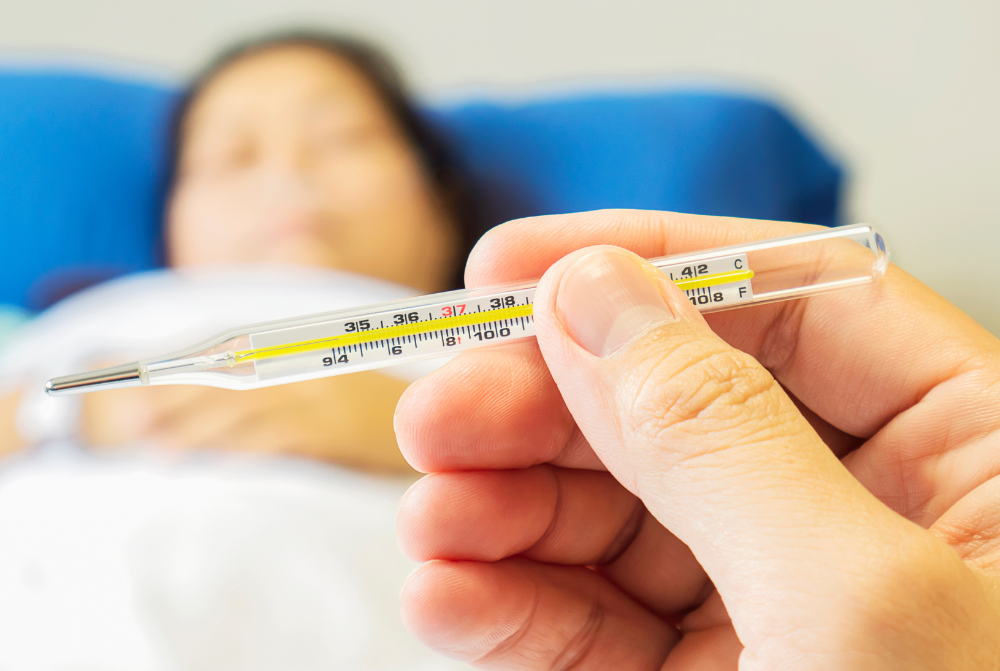
A fever is a condition where our body temperature rises in response to infection or illness. While fever is often a sign that the body is fighting an infection, it’s important to monitor your temperature to prevent it from reaching dangerous levels. A temperature above 40°C (104°F) can be a sign that the fever has reached a dangerous level and requires immediate medical attention. So, how can you safely lower a high body temperature? Here are some steps you can take to reduce a fever and help your body recover more quickly.
1. Drink Plenty of Fluids
When you have a fever, your body will sweat to cool itself, which can lead to significant fluid loss. Staying hydrated helps maintain fluid balance and supports the body’s natural cooling process.
Drinking water, coconut water, or electrolyte solutions can replace lost fluids, helping lower body temperature more effectively and easing discomfort.
2. Warm Water Compress
Unlike cold compresses, which can cause shivering and actually increase body temperature, warm water compresses helps maintain comfort while also aiding the cooling process.
When warm water is applied to the skin, it increases blood circulation on the body’s surface, helping to release excess heat and facilitate a gradual decrease in body temperature. Some suitable areas for warm water compresses include the forehead, neck, armpits, and wrists and ankles.
3. Don’t Cover Yourself with Thick Blankets
Covering yourself with thick blankets when you have a fever can actually increase your body temperature because the blankets trap heat in your body and prevent the body’s natural cooling process through sweating.
Instead, use a thin blanket or leave your body uncovered to allow air to circulate freely and help lower your body temperature more effectively.
4. Eat Light and Easy-to-Digest Foods
Heavy or fatty foods require more energy to digest and may raise body temperature. Light, easy-to-digest options like chicken soup, rice porridge, bananas, apples, and melons are better choices during a fever.
Chicken soup provides fluids and energy without burdening digestion, while rice porridge soothes the stomach. Fruits high in water and vitamins help with hydration and nourishment.
5. Taking Medication Such as Paracetamol
Taking fever-reducing medications such as paracetamol or ibuprofen can lower body temperature by reducing the production of prostaglandins, chemicals that cause fever during infection.
Generally, paracetamol can be taken every 4-6 hours at a dose of 500-1000 mg (as recommended by your doctor), while ibuprofen can be taken every 6-8 hours at a dose of 200-400 mg. Be sure not to exceed the recommended dose and consult your doctor if the fever persists.
What Should You Do If Your Fever Won’t Go Down?
If you’ve tried to lower your temperature but your fever still doesn’t go down, it could be a sign that your health condition requires further medical attention. In this situation, it’s crucial to consult a doctor immediately to determine the cause of the fever and receive appropriate treatment.
You might consider using our Online Doctor Consultation service. With this service, you can speak directly with a licensed doctor from the comfort of your home, receive a quick diagnosis, and receive treatment recommendations tailored to your condition.
Source:
https://www.mja.com.au/journal/2011/195/8/fever-and-antipyresis-infection